Campsites and Travel System
Campsites in Harvest Moon: Echoes of Teradea: resting and stamina recovery, cooking at the fire, the camp menu options and travelling merchants.
The world is too big to cross in one day, so you set up at campsites to rest and recover stamina, cook meals over the fire, and meet travelling merchants who stock items you cannot buy anywhere else.
Campsites exist because Teradea is too large to cross in a day. They are the mid-expedition checkpoint: rest, recover, cook, regroup, and then keep going.
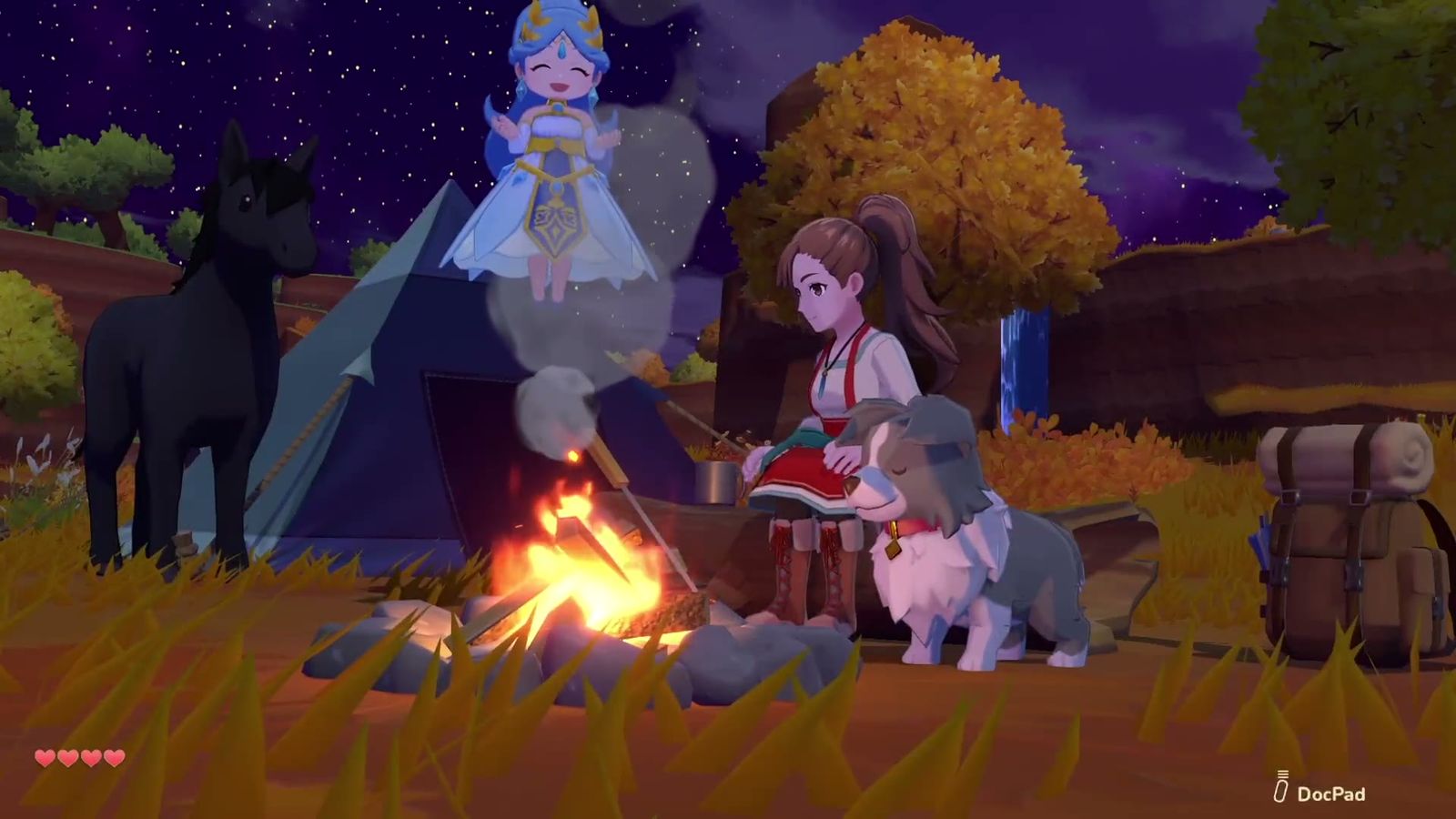
Official launch-trailer frame — a campsite at night, with animals in the circle.
What a campsite does
Natsume describes it directly: the world is too large to explore in a single day, so you set up at campsites to rest, recover stamina, and cook meals by the fire.
That makes campsites functional rather than scenic. If you are planning a trip to a remote island, a deep cave or a village on the far side of the map, the campsite is what makes the return trip survivable.
The camp menu
The campsite interaction ring is one of the few places where the game lays its systems out in one place. The prompts are pad buttons and they read:
| Prompt | Action |
|---|---|
| LT | Select Song |
| LB | Activate Photo Mode |
| RB | Change Outfit |
| Y | Cook |
| X | Animal Bag |
| A | Sleep! |
Each of those deserves a second look.
- Select Song implies music is a selectable part of the camp experience, not just background audio.
- Activate Photo Mode is how you take photos out in the world — worth knowing, because some Power Statues set you a photo objective and mark the correct subject with a special symbol.
- Change Outfit lets you swap clothing mid-trip, which is how you handle the heat and cold zones without walking home. Tidewind clothing protects against heat; Quarrytop clothing protects against cold.
- Cook turns ingredients into meals by the fire.
- Animal Bag is how your travelling companions come with you. If you have been wondering where the companion system physically lives, this is it.
- Sleep! ends the day at the camp rather than at the farm.
Travelling merchants
Merchants appear at campsites and sell items you cannot buy anywhere else. That is the whole reason to stop at camps you have already visited: the stock is exclusive, and their routes and schedules are part of what you discover by travelling.
Practical approach: stop at every camp you pass, even briefly, and check what is on offer before you sleep.
Cooking
Cooking happens at the fire and turns gathered ingredients into meals. Since the game is generous about what counts as food for animals, do not empty your bag into the pot — keep edible forage for animal feeding and wild-animal distraction, and cook the things you have surplus of.
Meals are also the natural thing to carry on a long trip, which is what cooking is for.
When to use a campsite
- Mid-route on a cross-map journey. Cheaper than walking home and back.
- Before a cave run. Full stamina going in beats a half-tank and a long walk out.
- On an island expedition. Once you are out on open water, the camp is your only base.
- When you want a merchant. Exclusive stock only shows up here.
- When you want to change gear. Outfit swapping mid-trip saves a whole round journey.
Campsites and the rest of the game
Campsites are the support structure for the two systems that push you furthest from home: remote islands and deep caves. The islands themselves, and the nautical charts that lead to them, are covered on map and exploration; the stamina economy the camp restores is tied to power statues; and the animals that make the journey worthwhile are on animal companions.