Wild Animals and Night Danger
Surviving wild animals in Harvest Moon: Echoes of Teradea: wolves, bears and tigers, how taming works, what getting caught costs you and the ways out.
Wolves, bears and tigers roam the wilderness, and if one catches you it takes the items you have collected and sends you back to your farm. You can distract them with food, back away, ride past on a mount or bring a dog companion.
Two separate things in Echoes of Teradea can ruin your day in the wilderness: the mist that swallows the Forest of Echoes, and the animals that live in it. This page is about the animals — what hunts you, what it costs to lose, and the four ways out of an encounter.
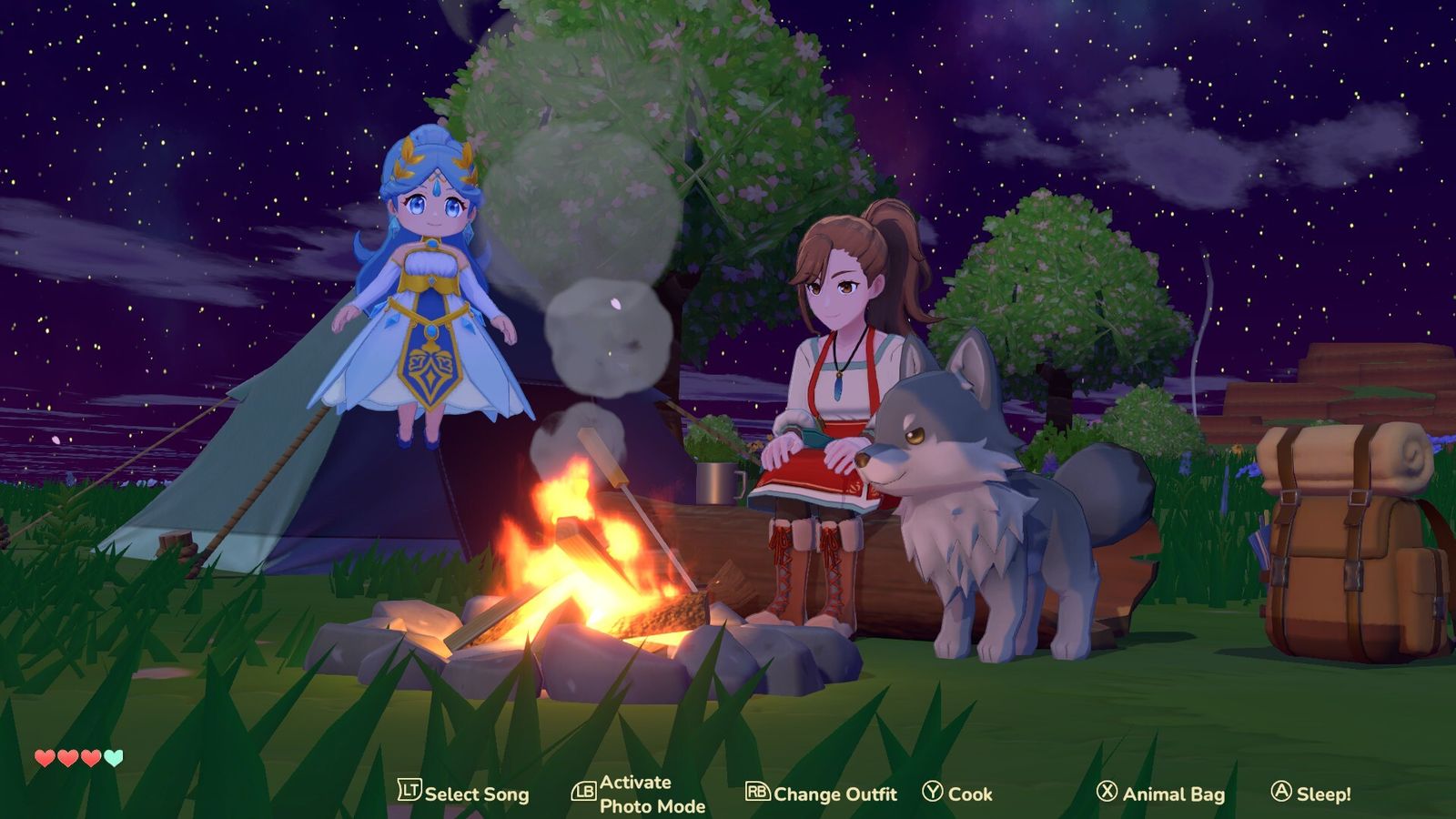
Official Steam store screenshot — night at a campsite. Wolves are the first and most persistent threat in the game.
What is out there
- Wolves. The defining threat of Teradea. They appear around Bloomfield Village at night, and a large guardian wolf is said to command them.
- Bears. Heavy, territorial, and present in the field terrain.
- Tigers. Fast, and the encounter you least want to be surprised by.
Natsume's own warning is explicit: keep your wits about you, avoid or escape these animals, and do not let yourself get caught.
What happens if you lose
Getting caught has a specific and painful cost:
- You lose the items you have collected.
- You are sent back to your farm.
There is no death screen and no long recovery — it is a straight tax on the run. If you had spent an hour gathering ore in a cave or foraging a new region, that is what you lose. That is the whole argument for travelling light on high-risk trips and for banking what you find before pushing deeper.
Four ways out of an encounter
1. Drop food. The cleanest answer. Put a food item on the ground and the animal goes for it, giving you space to walk away — or, if you want it on your farm, space to approach and pet it.
2. Back away. Retreating works if you are not already too close. Do not turn and sprint unless you have the stamina to outrun it.
3. Ride past. A mount makes the wilderness largely optional. This is the single strongest argument for taming a horse in your first week: it converts a threat into scenery.
4. Bring a dog. A pet dog is the game's own suggested solution — it protects you from wild animals. It takes a slot that a cat could have taken, so it is a real trade-off rather than a free upgrade.
Turning the danger into a system
Wild animals are not only a hazard. They are also the source of your companions, and the tame process uses the same tool as your escape.
- Food on the ground calms an animal and lets you get close enough to pet it.
- Petting plus feeding progresses the bond toward taming.
- Bigger, more aggressive animals take longer and are harder to approach.
- Some animals in dangerous areas chase rather than flee, which means taming them looks a lot like being hunted until the bond lands.
Which companions are worth the risk, and what each one unlocks, is on animal companions.
Practical wilderness rules
- Never leave the farm without food. It is your escape tool, your taming tool and your animal feeding tool in one stack.
- Do not carry more than you need into a cave. Everything in your bag is what you lose.
- Bank before you go deeper. Return to the farm or a campsite and drop off what you have found before pushing into a new area.
- Travel in daylight when the story allows it. Wolves are a night problem specifically.
- Use the map to plan the route, not just the destination. Knowing where the statues and camps are tells you how far you are from safety.
The mist itself
The mist over the Forest of Echoes is the story's central mystery rather than a survival mechanic — it is what the wolves came with, and lifting it is the goal of the game. The villages each carry a piece of it: wolves at Bloomfield, storms at Tidewind, earthquakes under Quarrytop, fading community in Maplehill. The villages page lays that structure out, and the four villages' story threads connect the cast to it.