Crops and Where Seeds Come From
Confirmed crops and seed sources in Harvest Moon: Echoes of Teradea, including radish, red onion and corn, village seed shops and harvest wisps.
Seeds are sold village by village, so the stock you can buy depends on where you are in Teradea. Radish, red onion and corn are all confirmed growing on the farm, and harvest wisps return as a second seed source.
Seeds in Harvest Moon: Echoes of Teradea are sold village by village, so what you can plant depends on where you are standing. This page collects the crops confirmed in official material, where seeds come from, and how to plan a season without wasting bed space.
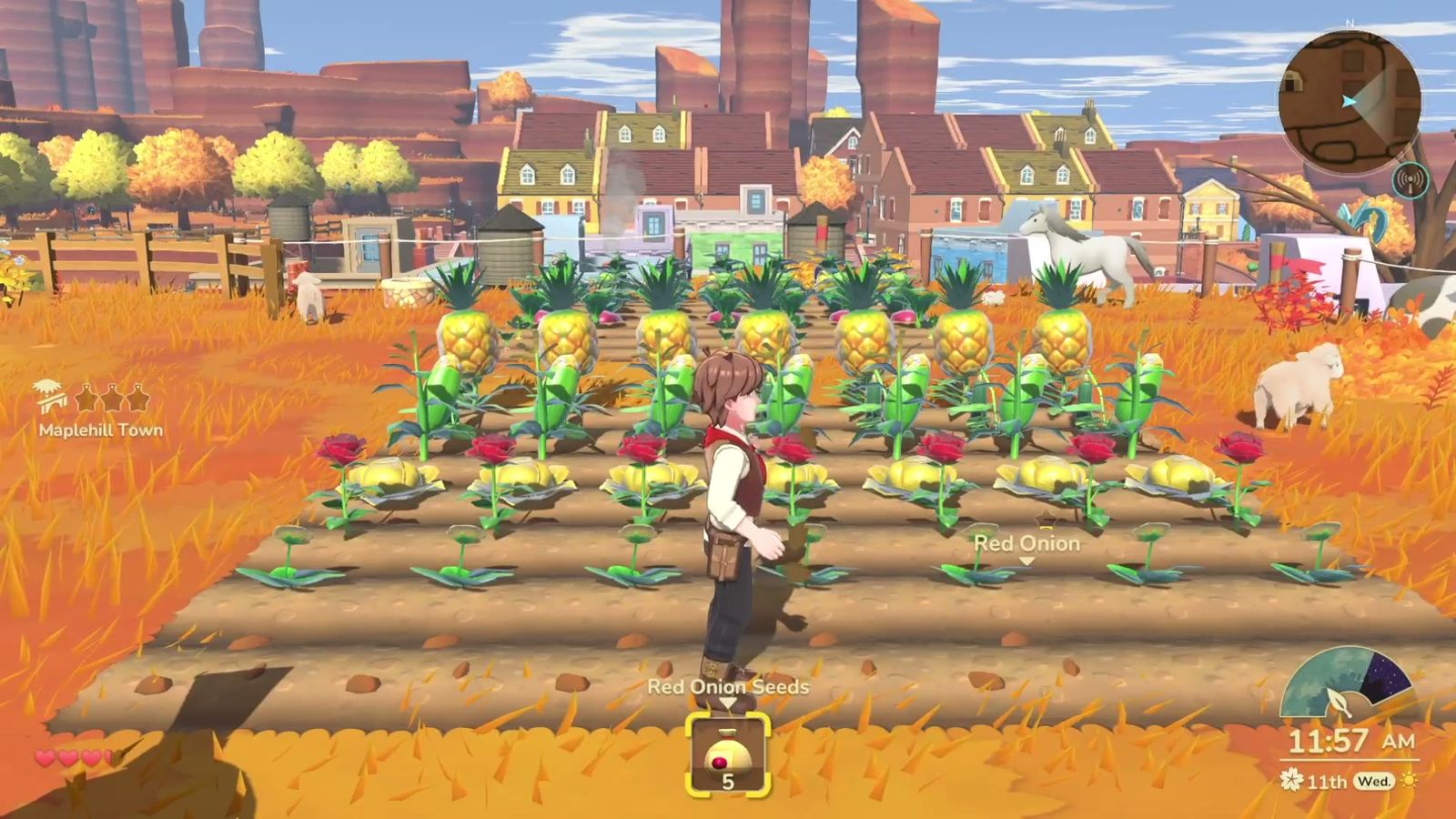
Official launch-trailer frame — a red onion bed. The interaction prompt in the same frame reads "Red Onion Seeds".
Confirmed crops
These appear in Natsume's own screenshots and trailer frames, turning the item prompt on screen. They are the ground floor of your farm.
| Crop | Where it was confirmed |
|---|---|
| Radish | Trailer frame with the prompt "Radish" while the player waters a bed |
| Red Onion | Trailer frame with a field of red onions and the prompt "Red Onion Seeds" |
| Corn | Official store screenshot of a corn field with a harvest prompt |
| Grass | Free grass seeds from the forest sprite on your own farm; harvestable two to three times |
| Pineapple | Seeds found on the remote islands reached by nautical chart |
Natsume has never published a seed price list, growth-day table or per-day profit figure for this game. Rather than borrow numbers from a different Harvest Moon or from a fan estimate, this page sticks to what the game itself shows and the planning rules that do not need numbers.
Where seeds come from
- Village seed shops. Stock differs by village, which is the main reason to care where your farm is. A seed you can buy in Tidewind is not necessarily on the shelf in Quarrytop.
- Harvest wisps. The wisps that return from earlier Harvest Moon entries still hand out seeds. They are a second supply line that does not cost money.
- Your own farm. That forest sprite dropping three grass seeds every third day is a standing free supply.
- Remote islands. Nautical chart islands carry seeds you will not find on the mainland, pineapple among them.
Planning a season
Without published growth times, the reliable approach is a mixed bed rather than a monoculture.
- Stagger your planting. Put a few beds of a fast crop and a few of a slower one in on the same day, then replant each as it finishes. You end up harvesting something on most days instead of one enormous day and then nothing.
- Keep grass somewhere permanent. It needs no watering, regrows two or three times, and doubles as animal feed. It is the lowest-maintenance slot on the farm.
- Rotate. The game tracks crop rotation and soil quality, so leaving the same crop in the same bed indefinitely is fighting the system.
- Watch for mutations. A bed producing a variant is a gift, not a mistake, and mutant produce is worth holding back for gifting and trading rather than selling immediately.
- Plant for the quest list, not only for the wallet. Villagers and quests keep asking for specific produce, and a delivery you cannot make costs you Happilia and relationship progress.
What to sell and what to keep
The general rule in this series holds here: sell the surplus, keep a working stock.
- Hold back a stack of every crop you can grow. Quests and gift requests arrive without warning.
- Sell the tail end of a harvest rather than the whole thing, especially in a season you have not fully explored yet.
- Once hearts are high, animal produce is worth more per action than most crops — see the livestock page and the money guide for why.
How crops fit the rest of the farm
Crop work is what your planted beds need; grass and grazing are the cheap half of the operation. If you are still setting the farm up, the farming guide explains moving your farm and handling soil and rotation, and the beginner guide covers the first-week checklist that stops animals from eating your beds.