Tools, Crafting and Equipment
Tool and crafting basics in Harvest Moon: Echoes of Teradea: starting equipment, bag upgrades, lumber and materials, wool into cloth and outfit crafting.
The bag upgrade quest triples your inventory from two rows to six and is the single best early investment. Wool from a lamb turns into cloth, cloth turns into outfits, and outfits carry buffs such as heat protection from Tidewind and cold protection from Quarrytop.
Teradea gives you functioning tools from the start and then lets you decide how much you care. Two upgrades genuinely change how the game plays, and the rest of crafting feeds the outfit and quest systems rather than your tool tier.
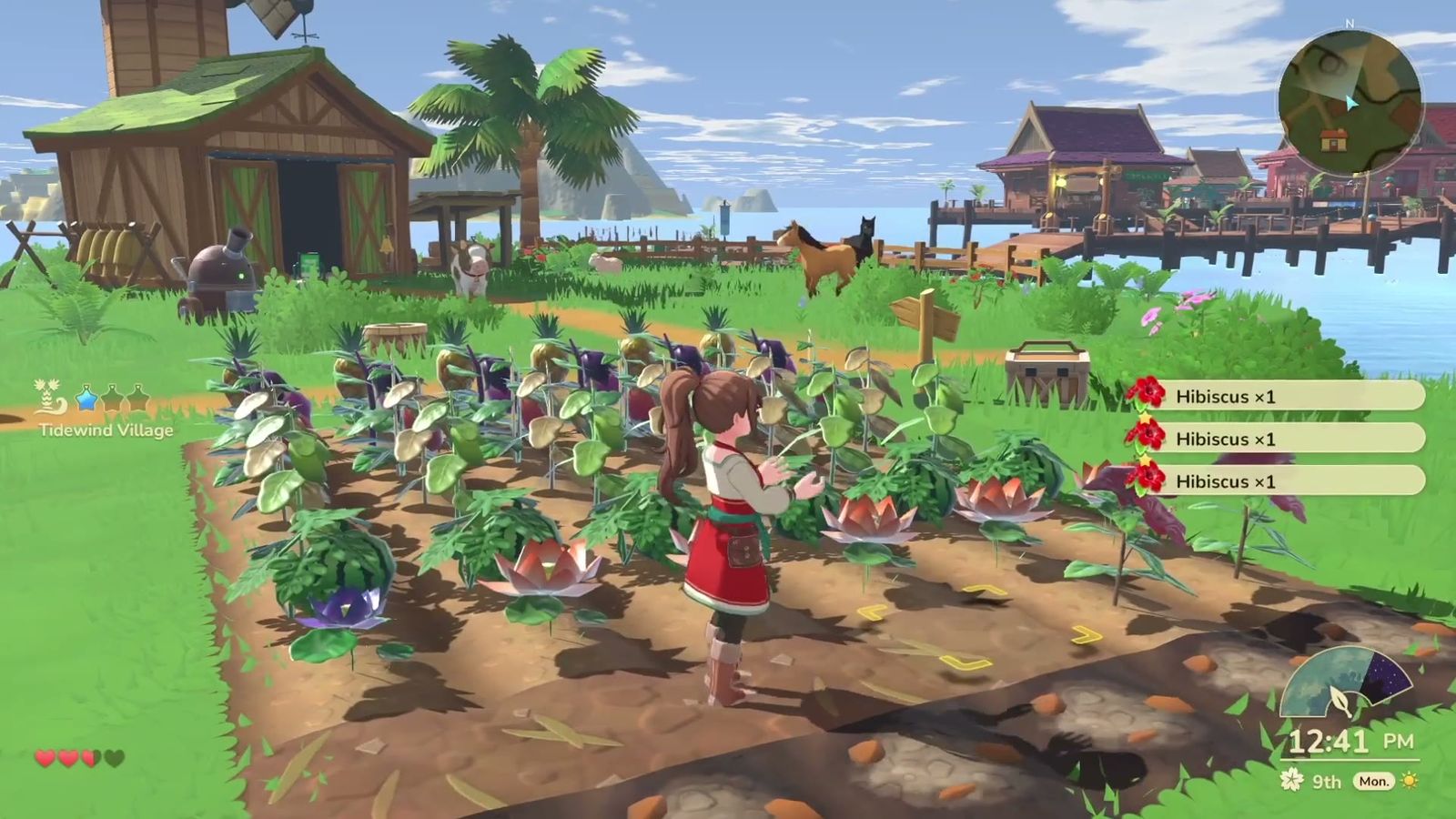
Official launch-trailer frame — a working field. Tools are manual, so the upgrades that matter are the ones that save trips.
What you start with
- A handmade watering can — the basic tier, confirmed on screen while tending a crop bed.
- Basic gathering tools for lumber and materials, used in the opening Bloomfield quests.
- A two-row inventory, which is the real bottleneck of your first week.
Watering and harvesting are manual actions. Nothing automates them except grass, which needs no water at all.
The bag upgrade is the best early purchase
There is an optional quest to upgrade your bag. It takes you from two rows of items to six — a tripling, not a doubling, which is far more than most players expect.
The knock-on effect is bigger than it reads. Six rows lets you carry a full set of tools, a stack of food for animal feeding and wild-animal distraction, forage from a run, and quest deliveries all at once. Before that upgrade, every trip involves deciding what to leave behind.
Take the quest as soon as it appears. It wants wool, which is a reason to get a lamb onto the farm early.
Materials and crafting
- Lumber comes from trees, and the opening quest chain uses it directly — gather ten and craft with it.
- Ore and gems come out of the maze-like caves spread across Teradea. Quarrytop is the mining village and holds the main mine.
- Wool into cloth. A lamb produces wool; wool turns into cloth; cloth turns into outfits and completes quests. This is the crafting chain that actually matters.
- Outfits are craftable, and can also be bought or earned from quests.
Because the map records where you found something, hunting materials is less about memory and more about opening the map and reading it. The map and exploration page explains how that recording works.
Outfits carry real buffs
Cosmetics are not purely cosmetic here. Each village has its own clothing style, and outfits are tied to the climate they come from:
| Outfit origin | Effect |
|---|---|
| Tidewind (summer port) | Protection from heat |
| Quarrytop (winter mining village) | Protection from cold |
Every outfit comes in six colour variants, so you are not choosing between the buff you need and the look you want.
On top of clothing, companion skills stack protection: a cat fed its favourite food can grant cold protection, heat protection and the ability to stay up late all at once.
Home decorating
Your house is craftable too — pots, picture frames, bed colour and similar touches. It is optional and slots are limited, so treat it as a small side project rather than a system to optimise.
What to prioritise
- Bag upgrade. Six rows, immediately, no argument.
- A fence around your crop beds. Cheap, and it removes the risk of livestock eating your field.
- Grass seed. Free from the forest sprite every third day, no watering, multiple harvests, and it feeds the whole barn.
- A heat or cold outfit before you commit to a long trip to Tidewind or Quarrytop.
- A second watering can tier, if only to shorten the route between beds.
There is no published crafting recipe list or tool-tier table for this game, so this page sticks to upgrades confirmed on screen or in Natsume's own descriptions. The farm systems those tools serve are in the farming guide, and the crafting chain's biggest payoff — livestock produce — is on livestock.